
23 Jun Wildlife Spotlight: Secretary Birds at Botlierskop
At Botlierskop Private Game Reserve in the Western Cape every animal contributes to the rich tapestry of life that makes this landscape so special. Among these remarkable residents is the Secretary Bird, an elegant and iconic African bird of prey that captures the wild spirit of the continent in a truly unique way. With its striking appearance, extraordinary hunting abilities, and important role in the ecosystem, the Secretary Bird is one of the most fascinating species guests may encounter during a safari at Botlierskop.
Meet the Secretary Bird
The Secretary Bird (Sagittarius serpentarius) is unlike any other bird in Africa. In fact, it is the only member of the family Sagittariidae, a family found nowhere else on Earth.
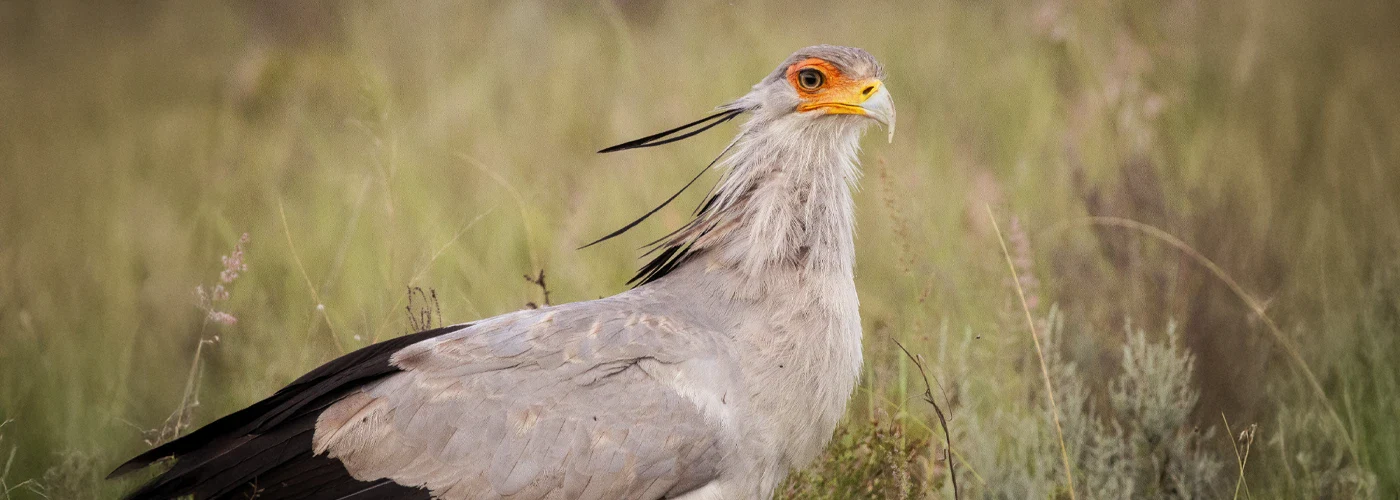
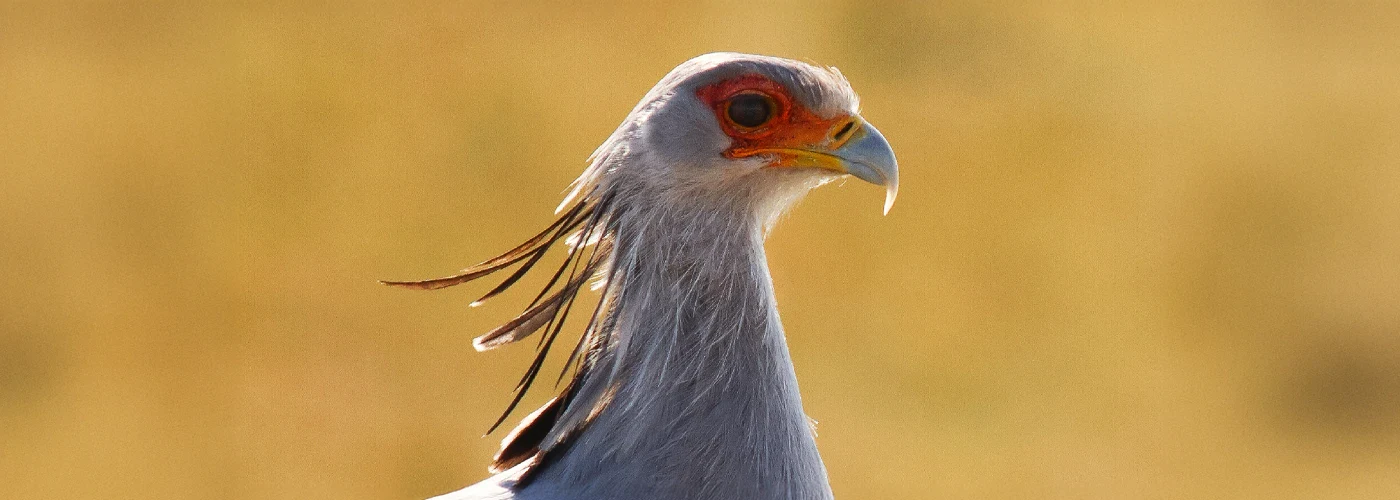
The bird’s unusual name is believed to come from the distinctive crest of long black feathers at the back of its head, resembling the quill pens once tucked behind the ears of 19th-century office workers.
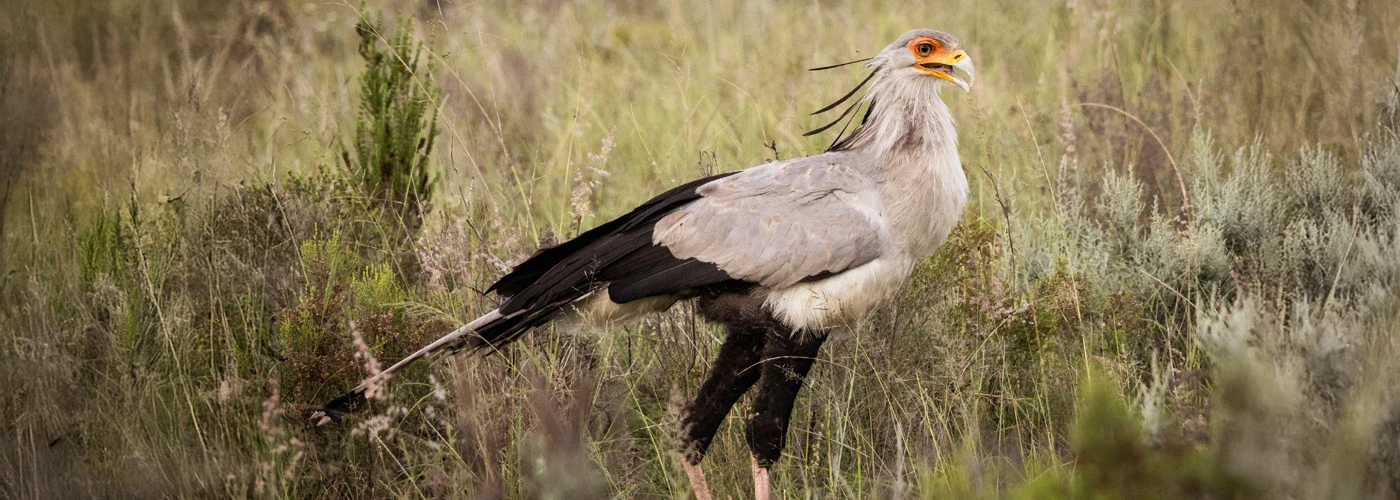
Secretary Birds are instantly recognizable thanks to their dove-grey plumage, black flight feathers, black thighs, elongated tail feathers, and striking bare facial skin coloured red and yellow.
Standing between 0.9 and 1.2 metres tall and weighing up to 4.3 kilograms, the Secretary Bird is one of Africa’s most distinctive birds of prey. With an eagle-like head and crane-like legs, they are often described as “eagles on stilts.”
Their long, powerful legs provide an excellent vantage point for spotting prey in the grasslands while keeping them safely out of reach of dangerous animals such as venomous snakes.
Nature’s Snake Hunter
The Secretary Bird is perhaps best known for its extraordinary snake-hunting abilities. Unlike most raptors that hunt from the air, Secretary Birds spend much of their day walking through open grasslands in search of prey. When they encounter a snake, they use their powerful legs to deliver rapid, forceful kicks aimed at the head.
These strikes are remarkably fast, allowing the bird to avoid retaliatory bites from even highly venomous species. Secretary Birds regularly prey on cobras, puff adders, mambas, and other reptiles, making them one of Africa’s most effective natural predators.
Their impressive plumage also serves a purpose beyond appearance. During a hunt, Secretary Birds may spread their wings and shake their tail feathers, creating a distraction that helps draw a snake’s attention away from their legs.
Although they are renowned for hunting venomous snakes, Secretary Birds are not immune to snake venom and rely instead on speed, precision, and agility to avoid injury.
Behaviour and Movement
Secretary Birds thrive in open grasslands, savannas, and lightly wooded plains throughout sub-Saharan Africa. They are particularly attracted to recently burnt areas where prey becomes easier to spot.
Unlike most birds of prey, Secretary Birds spend the majority of their time on foot. These long-legged hunters can cover between 20 and 30 kilometres in a single day while searching for food.
They are also highly territorial. During breeding season, pairs defend their territories aggressively and perform spectacular aerial displays that include soaring flights and undulating flight patterns above their nesting sites.
Should an intruder enter their territory, Secretary Birds may pursue them on foot with wings spread wide before launching powerful kicks using their formidable legs.
What Do Secretary Birds Eat?
Secretary Birds are opportunistic predators with a varied diet.
Their prey includes:
- Snakes and other reptiles
- Lizards and tortoises
- Amphibians
- Rats and other small mammals
- Ground-dwelling birds and chicks
- Large insects and invertebrates
Their ability to control populations of rodents, insects, and reptiles makes them an important part of maintaining a healthy ecosystem.
Where do Secretary Birds live?
The Secretary Bird is widespread throughout Africa south of the Sahara and occurs across all nine provinces of South Africa. These birds prefer open habitats such as grasslands and savannas where visibility is high and hunting opportunities are abundant.
Guests visiting Botlierskop Private Game Reserve in the Western Cape may be fortunate enough to spot a Secretary Bird striding through the veld or scanning the landscape from an elevated position.
Why Secretary Birds Matter
Secretary Birds play a vital role in African ecosystems. As apex predators, they help regulate populations of snakes, rodents, insects, and other small animals. Their natural pest-control services benefit both wildlife habitats and neighbouring agricultural areas, helping maintain ecological balance across the landscape.
The presence of healthy Secretary Bird populations is also an important indicator of healthy grassland ecosystems.
Conservation and the Future of the Species
Across Africa, Secretary Bird populations have declined dramatically in recent decades. As a result, the species was classified as Endangered by the IUCN in 2020, highlighting the urgent need for conservation action.
The greatest threat facing Secretary Birds is habitat loss caused by agricultural expansion, infrastructure development, and the conversion of natural landscapes into human settlements. As suitable habitat disappears, populations continue to decline across much of their range.
At Botlierskop Private Game Reserve, we are proud to provide a safe haven where Secretary Birds and countless other species can thrive. Protecting biodiversity and preserving natural habitats form an important part of our commitment to wildlife conservation and sustainable ecotourism along South Africa’s Garden Route.
By safeguarding these landscapes today, we help ensure that future generations will continue to witness the beauty, grace, and remarkable hunting prowess of one of Africa’s most iconic birds.
Photos taken by Jared Meyer.