
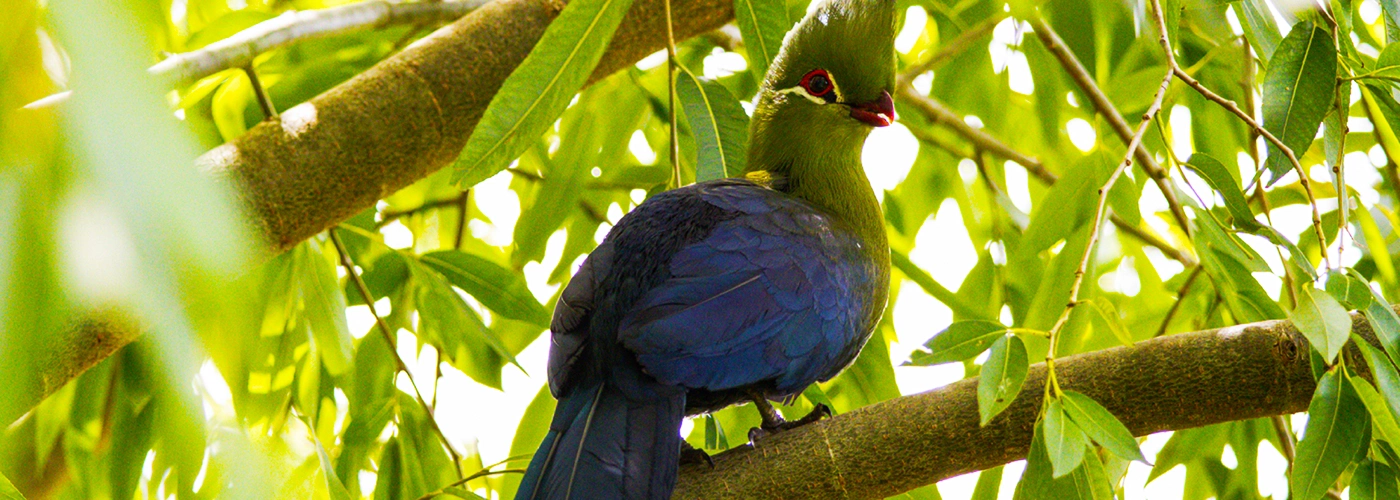
27 Mar Rare and Remarkable Birds of Botlierskop Private Game Reserve
Nestled along the breathtaking Garden Route near Mossel Bay, Botlierskop Private Game Reserve is renowned not only for its iconic wildlife, elephants, cheetahs, lions, and buffaloes, but also as a premier destination for birdwatching in South Africa.
With over 200 recorded bird species, Botlierskop is a haven for bird enthusiasts, from colourful forest dwellers to majestic birds of prey soaring over valleys. Our Rare Birds Guide highlights the reserve’s diverse habitats, including fynbos, riverine forests, grasslands, and wooded areas, which provide ideal conditions for both common and rare species to thrive.
Birds are crucial to maintaining healthy ecosystems. They control insect and rodent populations, pollinate native plants, and disperse seeds, helping vegetation regenerate naturally. Their presence is a strong indicator of a healthy South African ecosystem.
Botlierskop is particularly exciting for birdwatchers, as it hosts several endemic, threatened, and unusual birds. Whether you’re an experienced birder or enjoying a relaxed safari game drive, spotting these rare birds is always a highlight.
Why Birdwatching at Botlierskop Private Game Reserve is Special
The combination of fynbos-covered hills, open grasslands, rivers, and nearby coastal forests creates diverse habitats that attract a wide range of bird species. Guests may encounter everything from tiny nectar-feeding sunbirds to powerful raptors during their visit. Guided safari drives enhance the experience, with knowledgeable guides often spotting birds that might otherwise go unnoticed.
Here are 10 remarkable birds you might be lucky enough to see at Botlierskop Private Game Reserve:
1. Bateleur (Terathopius ecaudatus) – Endangered
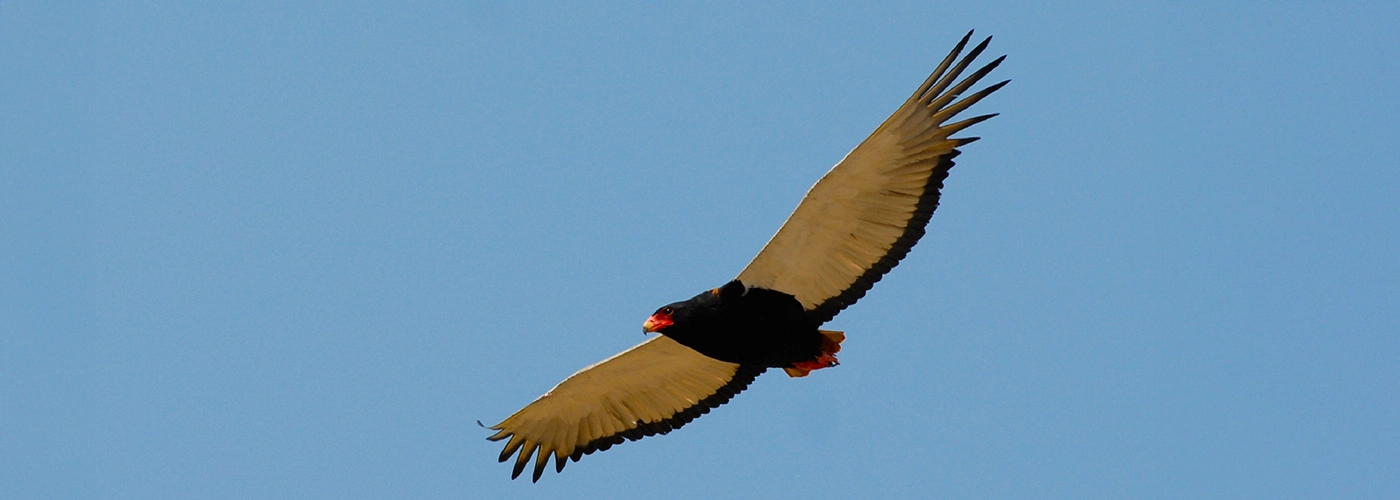
Back in May 2024, the first-ever sighting of a Bateleur in the area took place, a magical moment that caused great excitement among staff and bird enthusiasts alike. The name Bateleur comes from the French word for “tightrope walker”, referring to the bird’s distinctive rocking flight.
Appearance
A striking bird of prey with a very short tail, black plumage, and a bright red-orange face and legs. In flight it has a charismatic and unmistakable silhouette.
Distribution
Bateleurs are typically found in large protected savannah regions. However, sightings in 2024 confirm their presence within the broader Western Cape and Garden Route region, where they may occasionally be seen in rural areas.
Diet
They feed on snakes, rodents, birds, and carrion.
Behaviour
Bateleurs are often seen soaring for long periods, covering large distances. They may also be spotted perched on high branches, particularly after rainy weather.
2. Black Harrier (Circus maurus) – Endangered
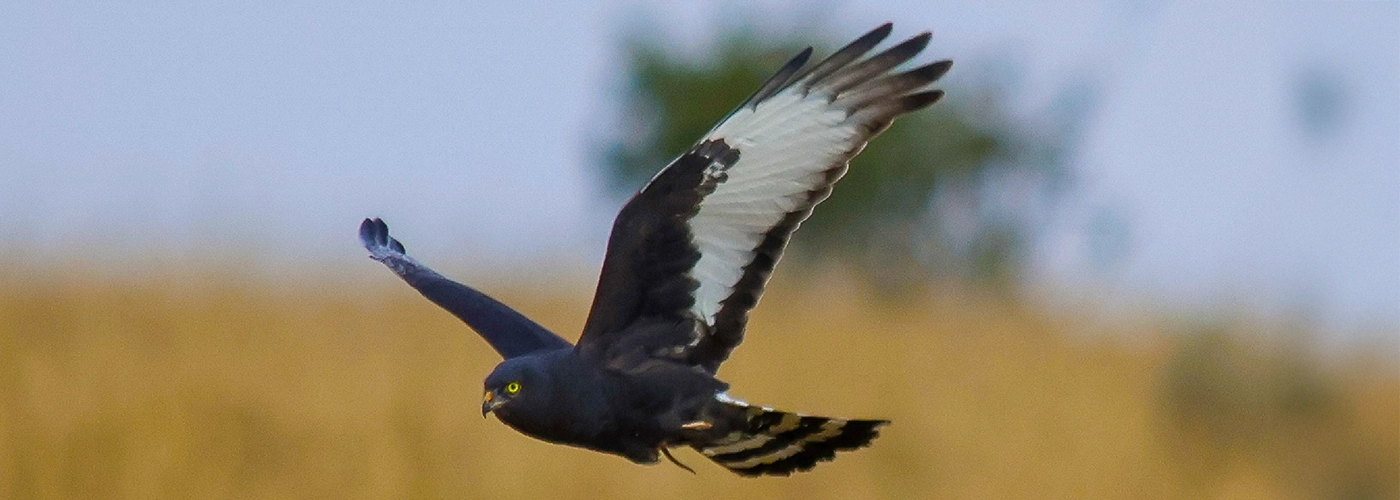
Black Harriers are southern Africa’s rarest endemic raptor. They were up listed from Vulnerable to Endangered in 2015 in South Africa and Namibia, with fewer than 1,000 mature breeding birds remaining.
Appearance
A striking dark harrier with large white panels on the underwings, a white rump, and banded tail.
Distribution
Restricted to southern Africa, mainly occurring in the fynbos and Karoo regions of the Western and Eastern Cape. They are also found in the grasslands of the Free State, Lesotho and KwaZulu-Natal.
Diet
Their diet consists mainly of rodents. In coastal areas they may also hunt reptiles and birds, while birds — particularly quail — are often targeted by pairs nesting in mountainous regions.
Behaviour
They hunt by flying low over fynbos, Karoo scrub, and dune vegetation while searching for small mammals and birds.
3. Cape Bulbul (Pycnonotus capensis) – Least Concern
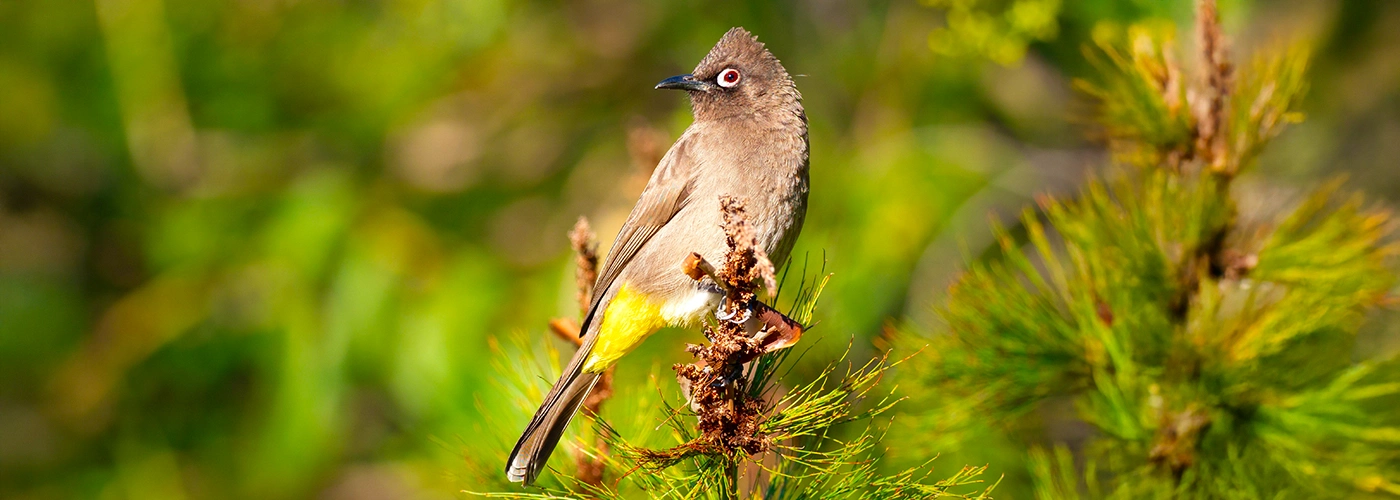
Appearance
A common but charming bird with uniform ashy-brown plumage, a yellow under tail, and a distinctive white eye-ring. Known in Afrikaans as Tiptol, it is affectionately nicknamed the “butter bum” due to the bright yellow under its tail.
Distribution
Endemic to South Africa, particularly in the Western, Eastern and Northern Cape provinces. They are commonly seen throughout the Western Cape and are frequent garden visitors.
Diet
Feeds mainly on fruit and berries, supplemented with nectar, seeds, and insects.
Behaviour
Cape Bulbuls are active and noisy birds often seen in pairs or small groups. They have a bubbly musical song described as “chit-trit-teet-turp”. They frequently perch on the tops of bushes, making them relatively easy to spot.
4. European Roller (Coracias garrulus) – Near Threatened
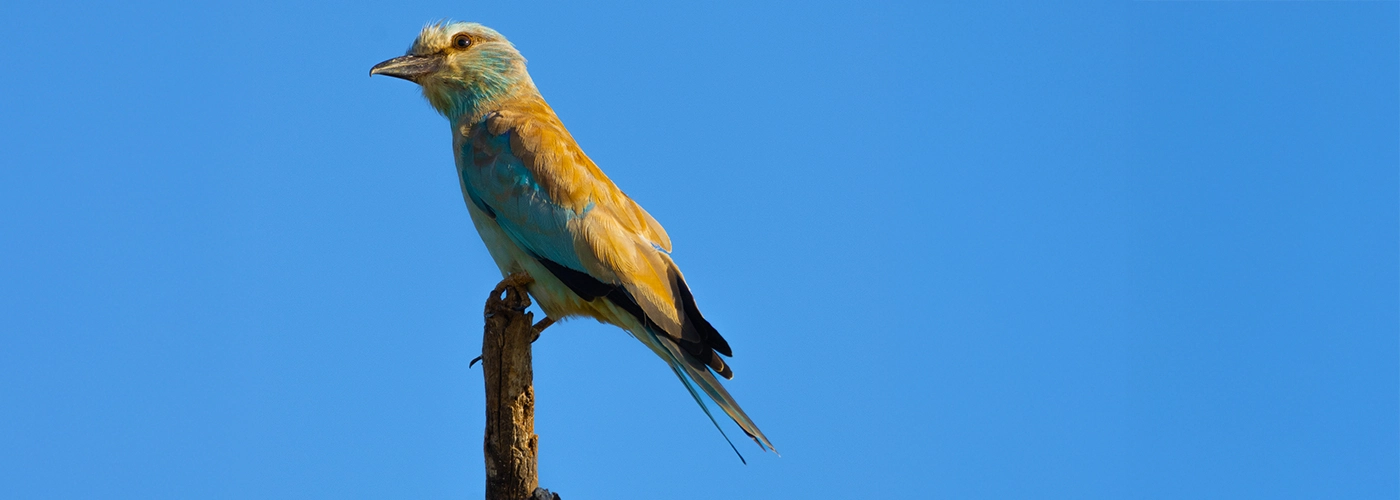
The European Roller is a spectacular Afro-Palearctic migrant, travelling over 10,000 km each year to spend the summer months in southern Africa, usually between November and March.
Although globally listed as Least Concern, it is considered Near Threatened in southern Africa due to long-term population declines since the 1970s.
Appearance
A stocky bird with beautiful pale blue to turquoise plumage and rich rufous-brown upperparts. Its wings flash brilliant shades of blue when in flight.
Distribution
Breeds in parts of Europe and Asia before migrating to Africa for the non-breeding season. Within southern Africa they are more common in the Lowveld and Limpopo regions but are occasional visitors to the Eastern and Western Cape.
Diet
Primarily feeds on large insects such as beetles, grasshoppers, crickets, and locusts.
Behaviour
Often hunts from exposed perches such as trees or wires, watching for prey before swooping down to catch it.
5. African Fish Eagle (Haliaeetus vocifer) – Least Concern
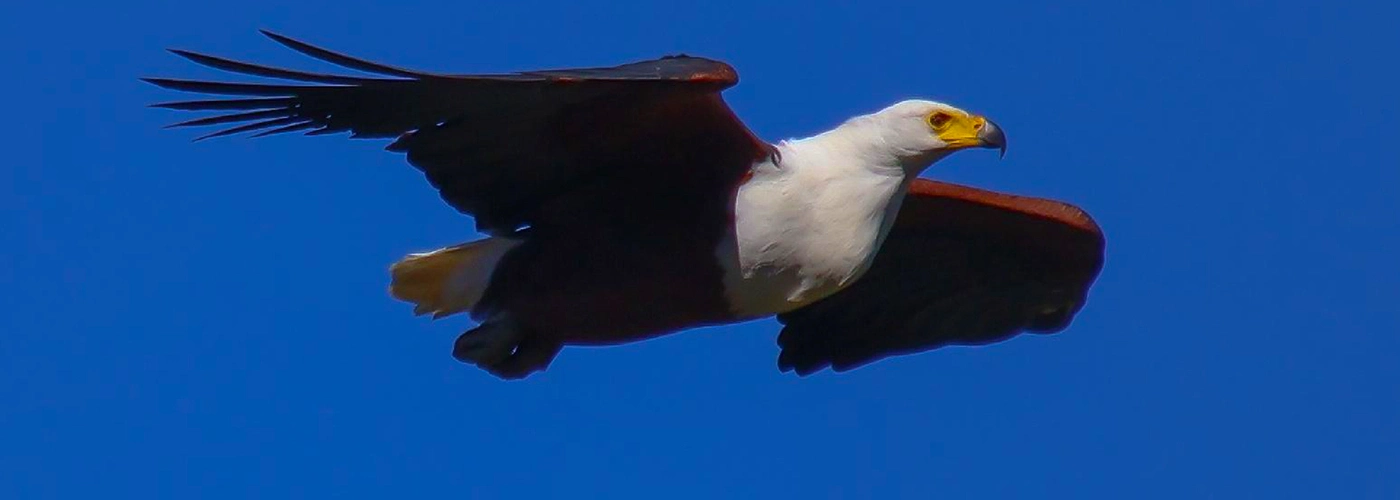
The African Fish Eagle is one of Africa’s most iconic birds of prey, famous for its unmistakable call that echoes across rivers and dams.
Appearance
Adults have a rich brown body with a striking white head, chest, and tail. Their powerful wings are dark, and their beak and facial skin are bright yellow with a black tip.
Distribution
Widely distributed across sub-Saharan Africa, particularly near lakes, rivers, and dams.
Diet
Primarily feeds on fish, which it catches by swooping down and snatching them from the water’s surface with its powerful talons. It may also hunt birds, reptiles, and occasionally small mammals.
Behaviour
Often seen perched in tall trees near water. Their loud, yodelling call is one of the most recognisable sounds of the African wilderness.
6. Half-collared Kingfisher (Alcedo semitorquata) – Vulnerable
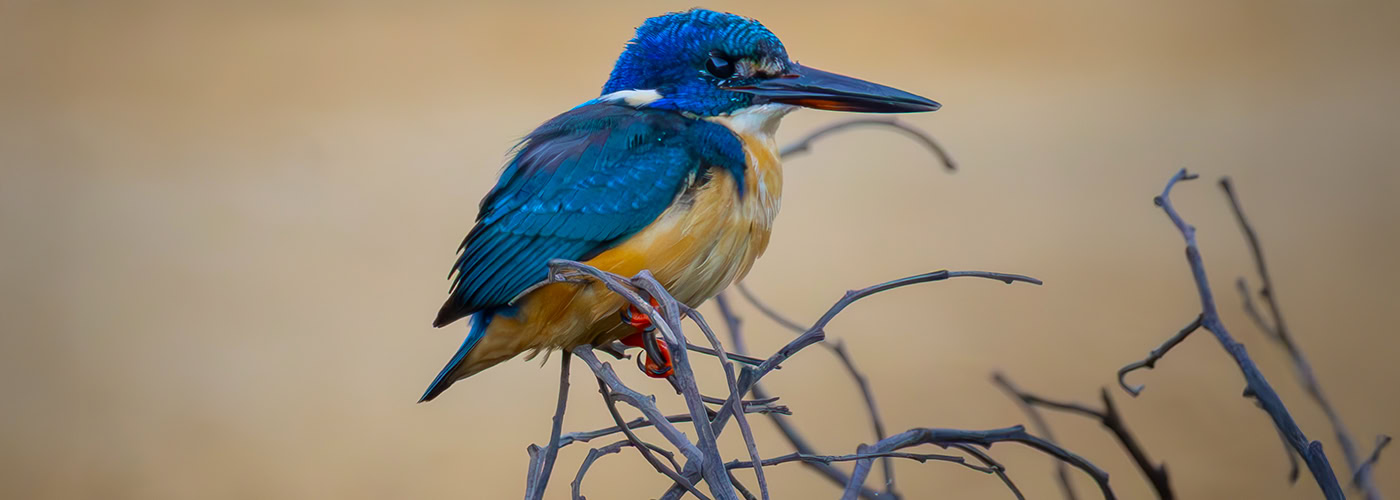
Our field guide Jared Meyer recently photographed his first Half-collared Kingfisher on the reserve, making it a very exciting sighting. It was only his second sighting ever at Botlierskop, which shows how rare they are here.
Appearance
A brilliant blue kingfisher that can sometimes be confused with a juvenile Malachite Kingfisher. Males have an all-black bill, while females have a red base to the bill.
Distribution
Found across sub-Saharan Africa along rivers, streams, and estuaries with dense vegetation along the banks.
Diet
Feeds mainly on small fish such as tilapia, barbs and robbers.
Behaviour
A shy and elusive bird that usually sits motionless along clear, fast-flowing rivers before diving suddenly to catch prey.
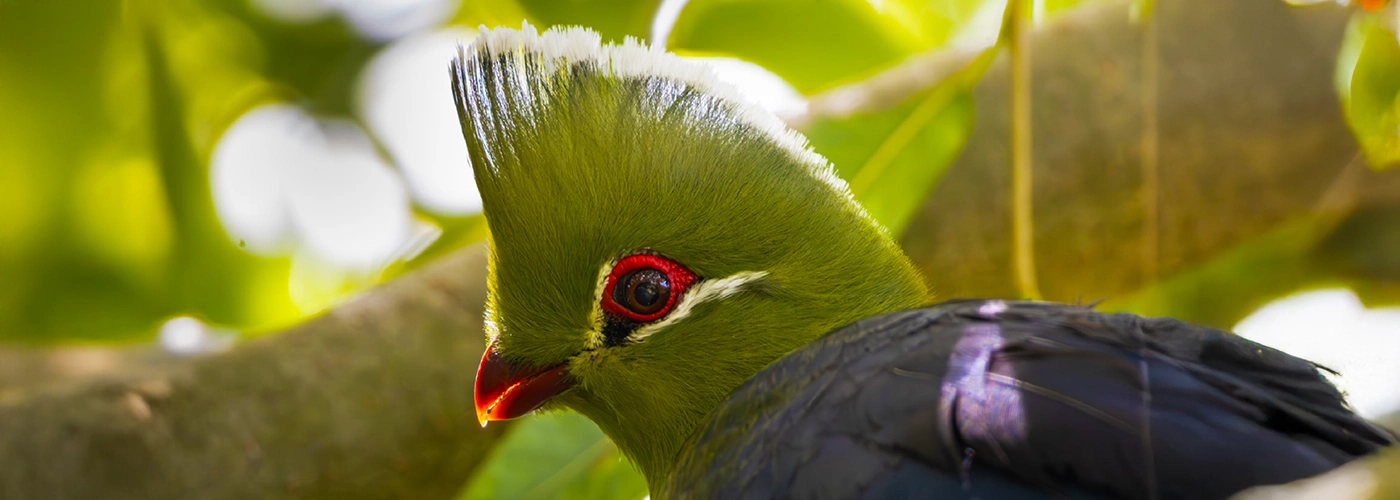
7. Knysna Lourie (Tauraco corythaix) – Least Concern
Appearance
A large, vibrant green bird with striking red wing feathers that become visible in flight. It has a short orange beak and a distinctive crest tipped with white.
Distribution
Found in Afromontane and coastal forests from the Western Cape through to KwaZulu-Natal and into Eswatini. It is especially associated with the Garden Route region.
Diet
Feeds mainly on fruit, berries, insects, and occasionally earthworms.
Behaviour
Known for its loud, hoarse “kow-kow-kow” call. These birds move through trees by hopping and climbing between branches while searching for fruit.
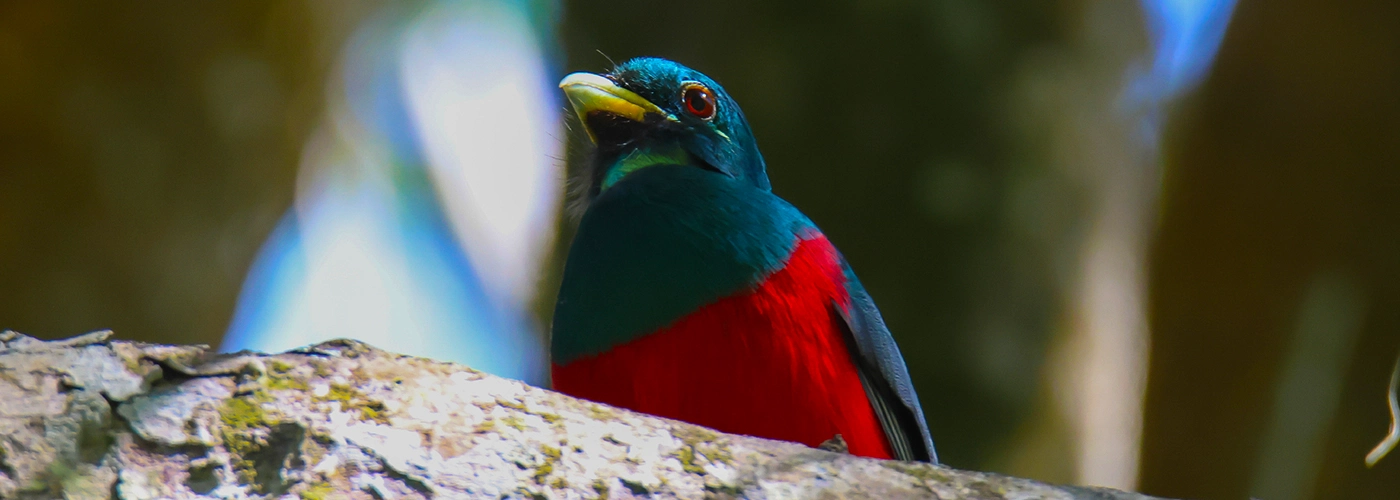
8. Narina Trogon (Apaloderma narina) – Least Concern
Appearance
A spectacular bird with iridescent metallic-green plumage and a bright scarlet belly. The male has a green face and throat, while the female’s face is grey-brown.
Distribution
Occurs across much of sub-Saharan Africa, inhabiting evergreen forests, riverine woodland, and coastal forests.
Diet
Primarily feeds on insects such as caterpillars, beetles and mantids, but may also eat small reptiles and frogs.
Behaviour
Often sits quietly in the forest canopy, watching for prey before making quick, direct flights to catch it. During the breeding season its deep “huooo-huooo” call helps reveal its presence.
9. Orange-breasted Sunbird (Anthobaphes violacea) – Least Concern
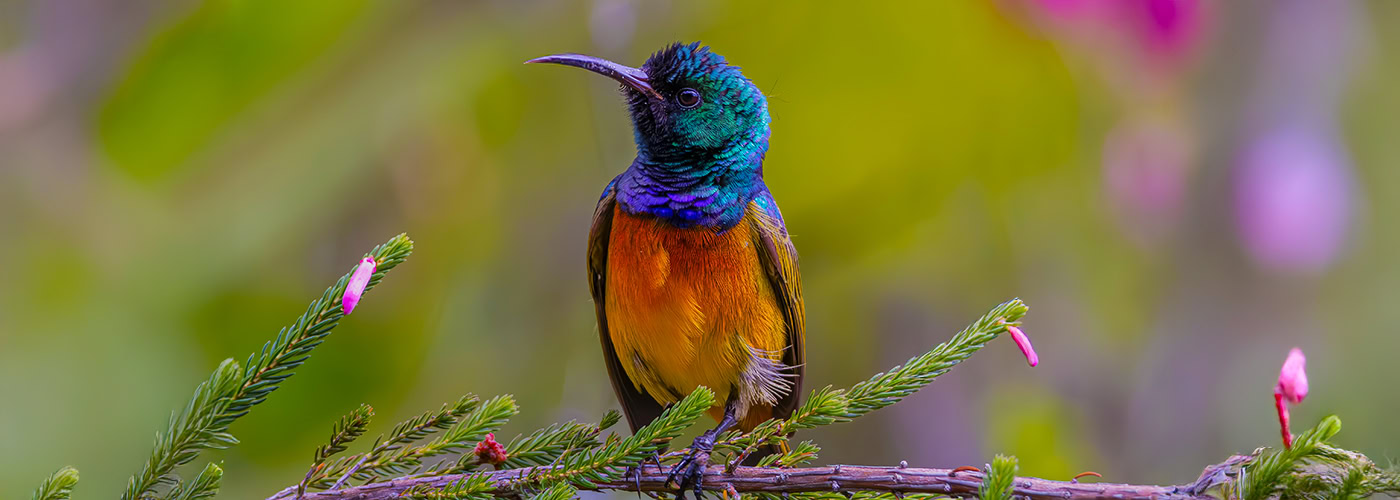
This beautiful sunbird is a restricted-range species closely associated with fynbos habitats.
Appearance
Males are striking, with a fiery orange belly, iridescent green head, and a purple breast band. Females are more subdued with olive colouring.
Distribution
Endemic to the fynbos biome of the Western Cape and western Eastern Cape.
Diet
Feeds mainly on nectar from Protea and Erica flowers, supplemented with insects.
Behaviour
Highly agile and territorial birds, often seen darting between flowering plants as they feed.
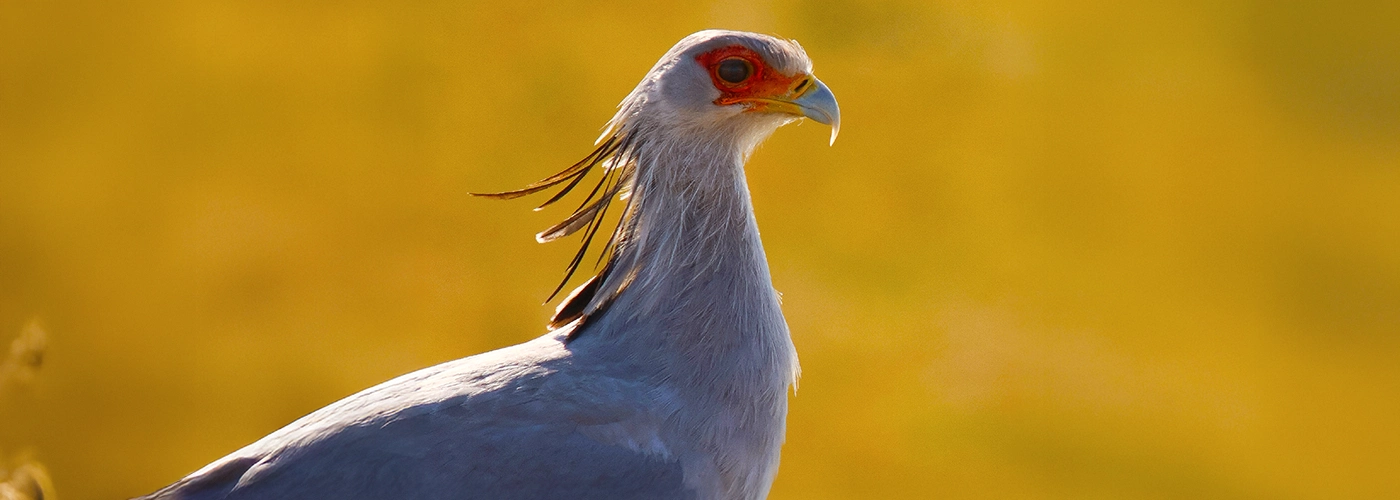
10. Secretary Bird (Sagittarius serpentarius) – Endangered
Secretary birds have been listed as Vulnerable by the IUCN since 2011 due to declining habitat and population numbers across Africa.
Appearance
A tall, elegant bird with long legs, grey plumage, and a crest of black feathers resembling quills behind the head.
Distribution
Endemic to the grasslands and open savannahs of sub-Saharan Africa.
Diet
Despite their reputation as snake hunters, their diet mainly consists of insects and other arthropods, along with rodents, birds, reptiles, and amphibians.
Behaviour
Unlike most birds of prey, Secretary birds hunt on foot, walking long distances through grasslands. They subdue prey with powerful, rapid kicks.
Birdwatching on Safari at Botlierskop
At Botlierskop Private Game Reserve, birdlife adds an unforgettable dimension to the safari experience. Guests can spot a variety of species while exploring valleys, rivers, and fynbos-covered hills. From the haunting call of the African Fish Eagle to the dazzling colours of a sunbird on a protea, birdwatching in the Garden Route is a magical complement to a wildlife safari.
Whether you’re a passionate birder or a casual nature lover, Botlierskop offers some of the best birdwatching opportunities in South Africa, making it a must-visit destination for nature enthusiasts.
Photographs by Jared Meyer.