
29 Apr World Earth Month at Botlierskop: Luxury Meets Sustainability in the Garden Route
In honour of World Earth Month, we are taking a moment to reflect on the many ways Botlierskop Private Game Reserve continues to embrace sustainability, conservation, and responsible luxury travel in South Africa.
Earth Month is a global reminder of the importance of protecting our planet through awareness, action, and long-term environmental commitment. At Botlierskop, this philosophy is not a once-off initiative, but something deeply woven into the identity of the reserve itself.
The conservation ethos of Botlierskop traces back to the late Dr Dirk Neethling, whose vision was rooted in respect for wildlife, land, and ecological balance. Today, that legacy is carried forward by his son Arnold Neethling, who continues to grow Botlierskop as a leader in eco-friendly safari experiences and sustainable tourism in the Garden Route.
Living Conservation, Not Just Practising It
At Botlierskop, conservation is not a concept—it is part of daily life. From habitat restoration to renewable energy systems, every decision is guided by a long-term commitment to protecting biodiversity while still offering a world-class luxury guest experience.
A strong focus is placed on responsible land management, including the removal of invasive alien vegetation, which helps restore indigenous ecosystems and protect natural water systems. These ongoing efforts not only support the environment but also create meaningful employment opportunities within surrounding communities.
Sustainability also extends into how the lodge operates behind the scenes. Waste reduction and recycling are embedded into daily operations, alongside thoughtful reuse initiatives such as repurposing textiles and minimising single-use plastics wherever possible. Even small changes, like replacing individual plastic amenities with refillable glass dispensers, form part of a larger commitment to reducing environmental impact.
At Botlierskop, sustainability is not defined by a single initiative, but by a collection of thoughtful, ongoing practices that work together to make a meaningful difference. Let’s take a closer look at how we put this into action:
1. AWCF and Veterinary safaris
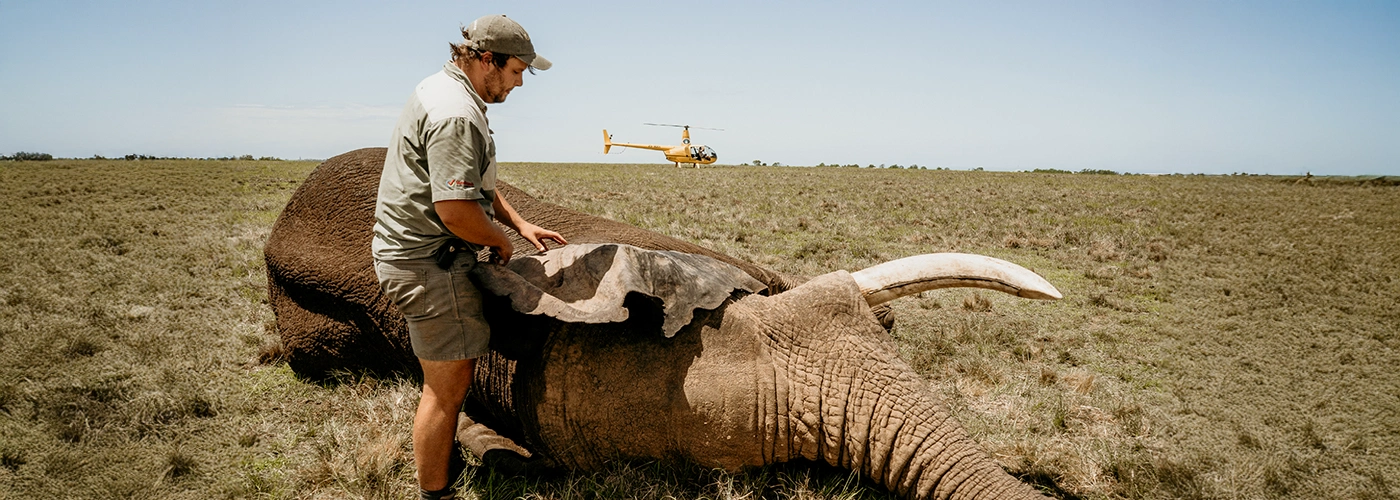
A key pillar of Botlierskop’s conservation commitment is our close partnership with the Africa Wildlife Conservation Foundation, a dedicated wildlife conservation organisation working across Africa to protect and restore wildlife populations and their natural habitats.
AWCF operates where it matters most—on the ground, responding directly to wildlife in crisis. Whether it is an animal injured by snares, caught in human-wildlife conflict, or displaced due to habitat loss, their team is mobilised immediately to provide expert veterinary care and practical intervention.
Led by wildlife veterinarian Dr Willem Burger, AWCF is built on a clear and urgent mission: to rescue, rehabilitate, rewild, and reforest. These four pillars guide every project they undertake, ensuring that conservation efforts are not only reactive, but also restorative and sustainable in the long term.
Their work spans across multiple African regions and ecosystems, with each project tailored to the specific challenges of that environment. From emergency veterinary procedures and wildlife relocations to habitat restoration and community-based conservation initiatives, AWCF delivers hands-on solutions where they are needed most.
What sets AWCF apart is their immediate, field-based response approach. Their teams work directly in the wild, often under challenging conditions, ensuring that every intervention has a real and measurable impact on wildlife survival and ecosystem stability.
Among these interventions are carefully managed veterinary procedures held at Botlierskop, where animals are safely immobilised using specifically formulated anaesthetics under the supervision of Dr Willem Burger and his team. These procedures form an essential part of wildlife conservation, allowing veterinarians to conduct health checks, research, tagging, and life-saving treatments.
For those with a deep interest in wildlife and conservation, these moments in the field offer a rare and meaningful perspective on the realities of protecting Africa’s wildlife. Being present during such interventions highlights the complexity of conservation work and the importance of long-term ecological understanding.
AWCF also places strong emphasis on education and awareness, recognising that meaningful conservation depends on future generations. Exposure to nature, especially at a young age, helps foster empathy, respect, and a lifelong appreciation for wildlife and wild spaces.
Through initiatives supported by Botlierskop, including field-based conservation experiences, all proceeds are directed back into AWCF’s work, ensuring that every effort contributes to the ongoing protection of Africa’s wildlife and ecosystems.
2. Eco friendly practices
Sustainability is at the heart of everything we do at Botlierskop. Our eco-friendly practices are designed to reduce environmental impact while maintaining the highest standard of luxury hospitality. From waste management to guest experience design, every detail is considered through a sustainability lens.
We actively reduce single-use plastics by implementing refillable glass dispensers in all rooms and using eco-conscious amenities such as Healing Earth products made from natural ingredients.
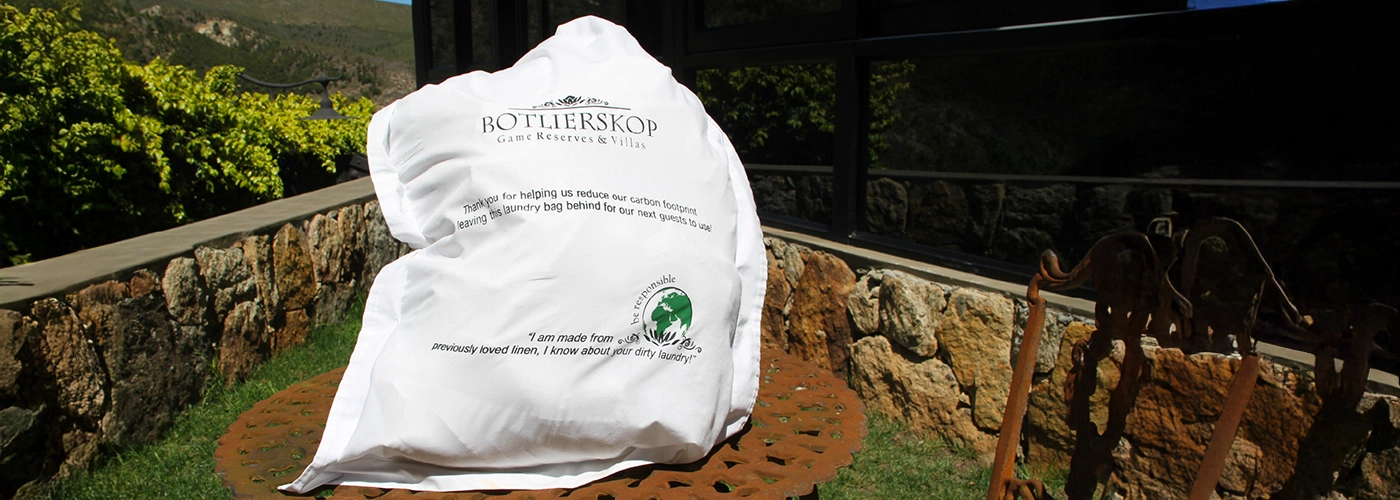
We also place strong emphasis on reuse and recycling. Materials such as textiles are repurposed wherever possible—for example, tablecloths are transformed into napkins, and laundry bags are made from recycled pillowcases.
A total of 62,455 glass bottles were recycled in 2025, saving enough electricity to power approximately two South African homes for a full year, or avoiding around 8.4 tonnes of CO₂ emissions.
These initiatives not only reduce waste but also create valuable employment opportunities within the local community. Plastic reduction remains a major focus, as plastic pollution continues to have a devastating impact on ecosystems and marine life. Through our operational systems, we actively reduce landfill contributions and promote responsible consumption throughout the reserve.
3. Invasive species removal
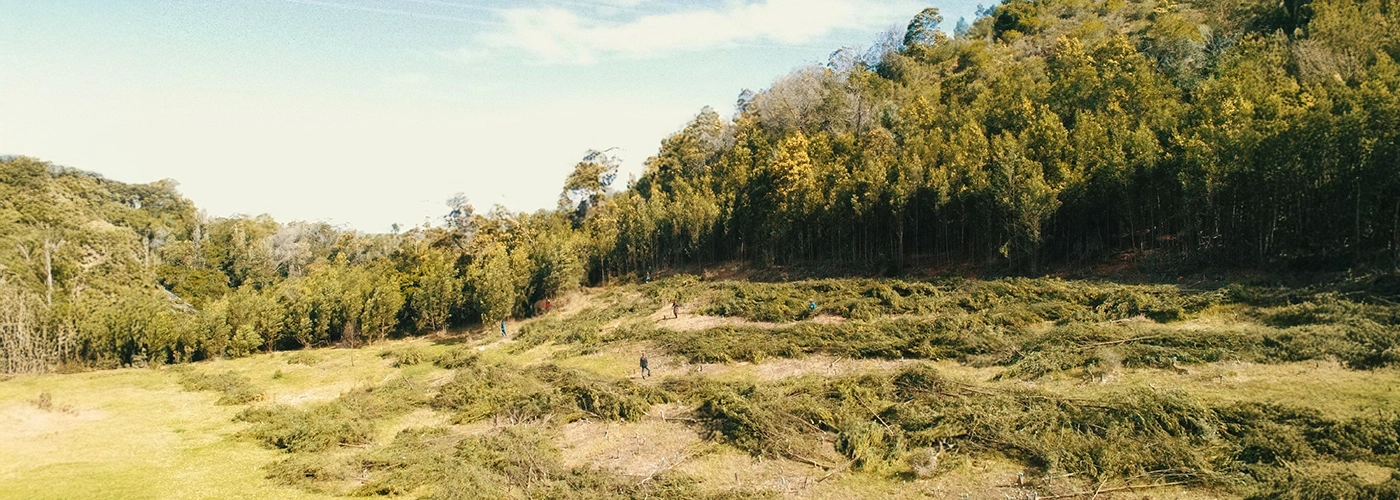
One of our most important environmental initiatives is the ongoing removal of invasive alien vegetation across the reserve.
Invasive species such as wattles, pines, gums, and hakeas pose a serious threat to South Africa’s natural biodiversity. They compete with indigenous vegetation, reduce water availability, and disrupt the natural balance of ecosystems.
Our alien vegetation management programme plays a crucial role in restoring the land to its natural state. By removing invasive plants and supporting the regrowth of indigenous flora, we are helping to rebuild the ecosystems that once thrived in this region. This programme also has a meaningful social impact, as it has created local employment opportunities and ongoing skills development within surrounding communities.
4. Renewable energy
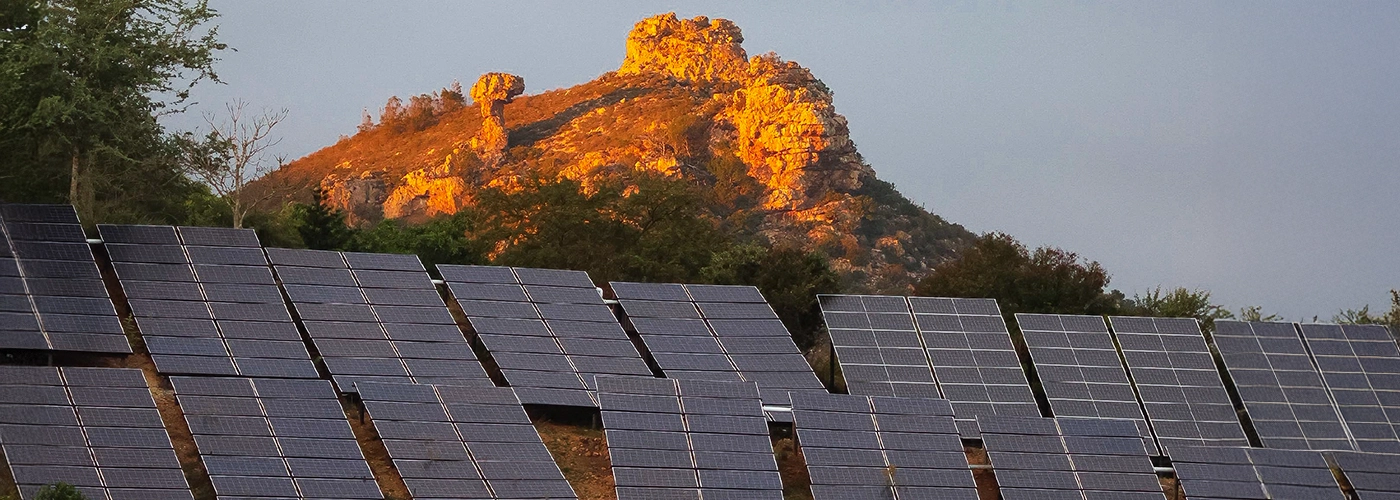
At Botlierskop Private Game Reserve, sustainability extends far beyond conservation—it is embedded in how we power our operations.
Over the past few years, we have made significant investments in renewable energy infrastructure to reduce our reliance on the national grid and lower our overall carbon footprint. Today, we operate with a powerful hybrid energy system that includes extensive solar installations and advanced battery storage capacity.
With over 600kWh of solar panels and more than 1300kWh of battery storage supported by high-performance inverters, we are able to operate largely off-grid during daylight hours, especially under the abundant sunshine of the Garden Route.
This system has already resulted in a substantial reduction in carbon emissions, equivalent to preserving thousands of trees and significantly reducing environmental impact. On sunny days, our tented lodge operates fully on solar power, demonstrating how luxury accommodation and renewable energy can work hand in hand.
Our long-term goal is to continue expanding our renewable energy capacity with the aim of becoming fully off-grid in the future, ensuring that luxury safari experiences remain both seamless and environmentally responsible.
Final Thoughts:
As we reflect during World Earth Month, we are reminded that true luxury is not only about experience, but about responsibility. At Botlierskop, every initiative is guided by a simple belief: that wildlife, people, and nature must coexist in balance for future generations to enjoy.